To get a good yield from a crop you need to sow the seeds quite thickly at first and thin them out later. If you only sow a very few seeds here and there about the garden, chances are they will be eaten by birds or bugs well before they ever get to maturity.
The same could be said about creative efforts. Sometimes its necessary to really concentrate on a few areas of intense activity rather than spread your creative seeds all over the garden in the hope that something will sprout.
Right now my creative energies are going into my artwork and my Dialog Visual blog and I am not able to put the time I would like to into my garden or this blog. Consequently I have had to reduce my garden maintenance to the minimum to keep it alive and I will not be posting on What We Grow in the immediate future.
As the days get longer and the weather warmer, I will resume my gardening tasks once again and I hope to bring What We Grow out of hibernation once again even if not in its present form.
In the meantime, I want to thank my fellow creative gardeners for their support on this journey so far and wish you all fruitful planting! Hope to see you on Dialog Visual soon :)
- Posted using BlogPress from my iPad
16 Jan 2011
Seeds Scattered Too Thinly


23 Nov 2010
What is E-waste?
If - like me - you thought E-waste was something to do with an overflowing waste bin in your email program, think again! It is in fact a quick way to say electronic waste.
27 Oct 2010
Creating Space
 |
| Fighting for space |
Don't get me wrong, I'm still to committed to the idea of a traditional country garden or 'potager' where flowers and vegetables rub shoulders in a riotous display of blooms and produce; I still believe that in the hot summer months, ground cover is the best way to protect the garden from evaporation; and I'm still equally committed to turning over as much of our plot to perennial plants - both flowers and veg - in order to minimize the amount of clearing and planting that needs to be done each season. Despite this, however, I know I'll always reserve some parts of the garden for annual crops because – I have to admit – that I do enjoy the process of clearing a space and planting those little jewel-like seeds full of promise into the ground.
This clearing of space has its parallel in other parts of life. Inspired by my cyber friend Dan Goodwin's 'Shedding Project' and spurred on by my partner's insistence that I do a little less, I've been getting down to a bit of clearing out both physical and psychological over the last month.
What's amazing is how much stuff there is, both in our habits and our household, that we simply do not see because we have grown so accustomed to its presence! In the same way that it feels like the rocket patch has always occupied two thirds of one side of the garden's growing space and there's really need to change it – until we realise that there just isn't any space to plant beans this year – so ingrained habits and assorted possessions come to take over our personal and mental space leaving no room for new ideas or fresh experiences.
 |
| Room to grow and expand |
It's been refreshing to see the humid earth appear from out under the greenery and to sprinkle in a bit of manure, gently fork it over, and add a layer of recently harvested compost from our bin and so ready it for planting this season's crops. Equally its been revitalising to designate Saturdays as to-do-free days to spend with my partner and to wake up on the other days to a do-able To Do list that fills me with enthusiasm as well as opening the way for new projects to blossom. Read More......
10 Oct 2010
No Waste in the Creative Garden
 |
   Some rights reserved by London Permaculture
 |
"Everything can be put to use within the creative process."
Shaun McNiff, Trust the Process - An Artist's Guide to Letting Go (Shambhala, 1998)
We've just harvested a good number of large buckets of compost from our rickety makeshift compost heap. There is nothing quite like the joy of reaping such riches from a process that takes almost no effort at all - just a stroll down to the garden with the kitchen scraps and the leaf fall from the patio, an occasional desultory stir and a bit of water in the summer and, voila, free topsoil full of nutrients!
Contrast this with the constantly irritating process of collecting all the waste supermarket packaging that we seem to collect despite our efforts to the contrary followed by the reward-less trip to the nearest recycling point with bulky and unwieldy parcels (no kerb-side recycling here!) of a product that probably should never have been invented in the first place and that will be with us for millennia to come (i.e. plastic in all its myriad shapes and forms).
A major benefit of an organic garden is that it is a closed-loop system that has no waste products, everything sooner or later rotting down and returning to whence it came. Its useful to think of our creative lives in the same way.
All to often we feel we have 'wasted our time' when we make something that doesn't fulfil the criteria or expectations we had in mind for it but this is erroneous thinking because, as in the garden, everything we do in our creative lives contributes to the whole: A tiny corner of a painting we don't like sparks an idea for another work; a misplaced brushstroke sets us to wondering how it would be to paint a large canvas with broad, dripping brushstrokes; An unfinished novel that has lain in the drawer untouched for years, is recycled into a series of short stories which get published; A week spent blocked with a work in progress eventually leads to the realization that we are bored with our process and we need to experiment with new techniques...
Our minds and psyches will function very effectively as virtual compost bins for recycling creative ideas if only we will stop inhibiting the process by our negative thinking and dismissing out of hand every aspect of our creative lives that doesn't seem to fit nicely into the 'product' category. Like the making of compost in the garden, this process requires no great effort on our part; We only need a little diligence and patience and in a short time we will be rewarded with buckets of rich ideas with which to dress our creative gardens and help them grow. Read More......
19 Sept 2010
Lemons
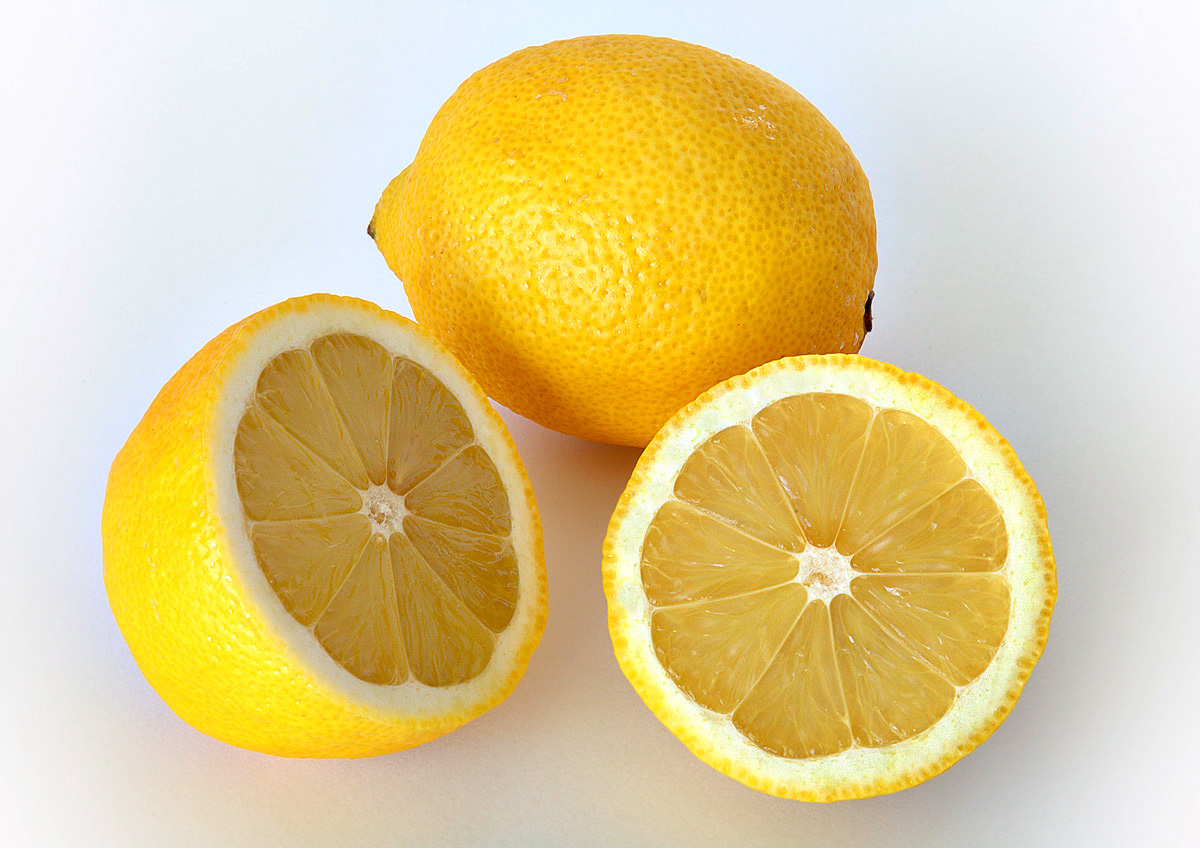
Original image by André Karwath aka Aka via WikiMedia Commons
"When life gives you lemons, you’re allowed to feel sad, frustrated and annoyed before you decide to squeeze them on your salad, plant the seeds in your yard, or ask your friend’s mother for her iced tea recipe."
I'm a sucker for a garden analogy as you know and especially when it's a humourous one, so I couldn't resist this one from Havi Brooks Read More......
12 Sept 2010
A Time for Everything

In the garden, there is a specific time for everything: for planting, for harvesting, for pruning, for fertilizing...And if you follow the biodynamic system and adjust your practices according to the moon, then these times are further subdivided into planting times for root vegetables as opposed to those that grow above ground, for trees that fruit as opposed to those that don't, etc etc.
An awareness of these natural cycles is something that we have grown further and further away from as we have changed to living in cities with 24 hour a day electric light and artificial heating and cooling systems and yet we continue to be governed by these ancient patterns although we are not always consciously aware of it.
Read More......
5 Sept 2010
Mysterious Bugs v Fragrant Blooms

As if this weren't disturbing enough, the normally robust snapdragons have been covered by what appears to my untrained eye to be some sort of rust and the indestructible hollyhocks have been so extensively attacked by the beetle that always eats their leaves, they they all but gave up flowering altogether!
Read More......
15 Aug 2010
The Ecology of Creativity
"The creative process is an ecology that depends upon the full spectrum of our resources"
Shaun McNiff, Trust The Process — an artist's guide to letting go (Shambala, 1998)

There's been some really lively and interesting discussions going on of late on my favourite creativity forum my favourite creativity forum. One like-minded soul started talking about how she felt that her different interests and projects fed into each other — allowing her to find enthusiasm for one when another flagged and that way she could keep moving. This made me think that our creative life is really like a mini ecosystem — such as we might strive to build in a permaculture garden — where each element (be it plant or structure) ideally has forum multiple functions: The principle function i.e. the reason we are growing it (or have sited in a particular place if it is a structure) plus at least one secondary function such as to promote or help with another aspect if the garden. This might be by deterring insects from damaging another plant, providing shade etc.
If we look at our creative ecology in the same way, we can see that the same might be true: A blog can serve not only to showcase our work but to connect with people by showcasing theirs; It may even be that we write our blog when we have reached a lull in another creative activity and the writing serves to clarify where we need to go next in the other project. Similarly, we can use a technique that comes relatively easily to us to create a piece that acts as a psychological counterbalance to the struggle we might be having with a more challenging piece; the first acting like a fertilizer for our confidence, keeping it boosted when the second one is threatening it.
All this stands directly opposed to the modern urban myth that dedicating yourself exclusively to just one discipline is the only way to be 'serious' about your creative work and yet you don't have to look far to find incredibly successful artists who are also musicians. Or poets. Or novelists.
Of course, there are only so many hours in a day and if we are blogging we are not painting and if we are painting then we cannot simultaneously be composing...and yet what the one robs of the other in terms of time, it so often gives back in the form of enthusiasm or inspiration.
If our creativity is an ecology, then having more than one type of plant in the garden means our landscape will always be varied, challenging and stimulating and the produce we yield will feed us a healthier, more balanced diet!
What does your creative ecosystem look like? Click on 'Comments' below the post and share your thoughts!
- Posted using BlogPress from my iPad
Read More......
Subscribe to:
Posts (Atom)

 Posts
Posts